Cotton: Moisture Absorbency
Cotton remains the preeminent plant fiber across the global textile trade, generating billions of t-shirts, jeans, and bedsheets annually. However, marketing descriptions often conflate "breathability" with "sweat management." Understanding how cotton moves moisture requires peering directly into the dried seed trichome of the Gossypium shrub.
The Hollow Lumen: Nature’s Hydraulic Conduit
During its 50-day boll growth cycle, an individual cotton fiber develops as a living single elongated cell filled with liquid protoplasm. As the boll ripens and bursts in the sun, the cell desorbs its sap and collapses into a flat, twisted ribbon with kidney-shaped cross-sections.
At the center of this collapsed ribbon lies a tiny hollow void called the lumen. When liquid sweat forms on skin, the hydrophilic hydroxyl (-OH) groups of the cellulose microfibrils pull water molecules inward via high surface tension. The lumen acts as an instantaneous capillary canal, drawing moisture deep into the interior of the yarn bundle.
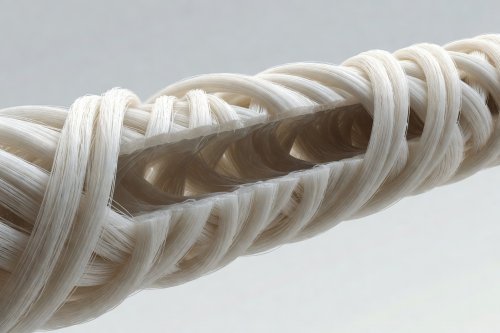
Why Cotton Is Wet When Cold: The Outdoor Hazard
In outdoor survival physiology, the adage "cotton kills" is grounded in thermodynamic law. While cotton feels extraordinarily comfortable during relaxed indoor lounge activities or arid summer days, it struggles severely under heavy aerobic exertion in cold or wet environments.
Unlike wool, which buffers vapor while its hydrophobic exterior repels liquid, cotton actively pulls liquid into its internal cellulose fibrils. Once saturated, cotton fibers swell by up to 14% in cross-section. This swelling closes the porous air gaps between woven threads, cutting off convective airflow.
Furthermore, cotton water molecules are tightly bound by hydrogen bonds to the glucose rings. This high latent heat requirement causes water to evaporate exceptionally slowly. In freezing mountain weather, wet cotton pressed against human skin conducts heat away from the core 25 times faster than dry air, precipitating rapid hypothermia.
Pima & Giza Cotton
Extra-long staple (ELS) varieties exceeding 35 mm in fiber length. Longer filaments allow spinning finer, smoother yarns with fewer exposed fiber ends, resulting in greater tensile longevity and reduced pilling.
Flax Bast (Linen)
Possesses a polygonal crystalline cellulose structure with high natural stiffness. Linen fibers do not cling to skin when damp, allowing micro-currents of air to circulate between garment and epidermis.
Mercerized Cotton
Treated with cold sodium hydroxide (caustic soda) solutions to round out the kidney-shaped lumen. This chemical modification increases luster, improves dye uptake, and boosts tensile burst strength by 20%.
Laundering Dynamics & Microbial Soil Removal
Cotton possesses one decisive biological hygiene advantage over all synthetics: it has zero affinity for oleophilic body oils. Human sebum lipids wash away effortlessly under standard 40°C wash cycles using mild surfactants. Cotton can also withstand 90°C sanitary boiling cycles without thermal degradation, making it the supreme medical and bedsheet textile.